

ADGC
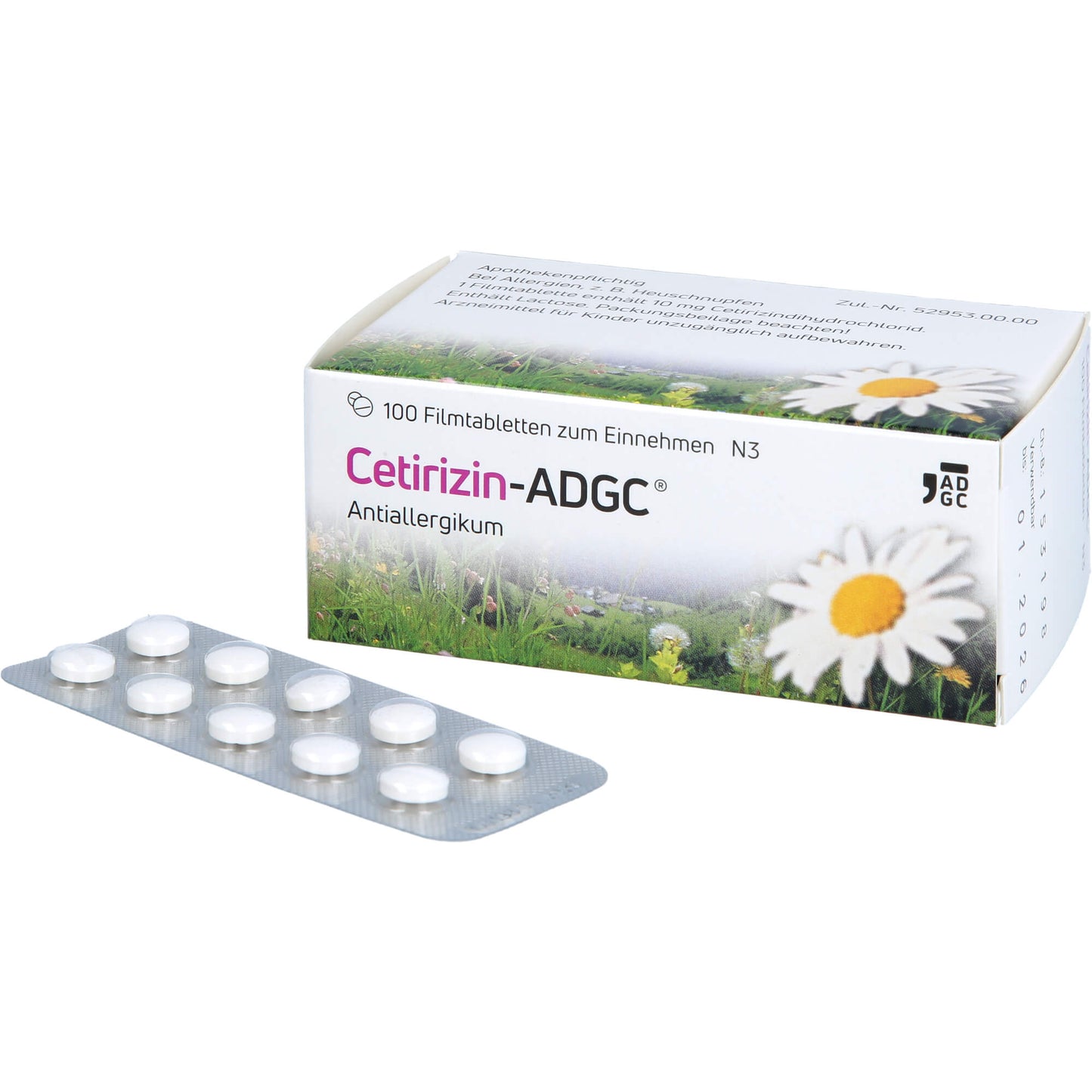
ADGC Cetirizine 100 film-coated tablets for allergy treatment
ADGC Cetirizine 100 film-coated tablets for allergy treatment
Couldn't load pickup availability
Cetirizine-ADGC film-coated tablets. Active ingredient: Cetirizine dihydrochloride. Indications: For the relief of nasal and ocular symptoms of seasonal and perennial allergic rhinitis (hay fever) and for the relief of chronic urticaria (chronic idiopathic urticaria).
For risks and side effects, read the package leaflet and ask your doctor or pharmacist.
PACKAGE LEAFLET: INFORMATION FOR THE USER
Cetirizine-ADGC film-coated tablets
Active ingredient: Cetirizine dihydrochloride 10 mg
Read the entire package leaflet carefully before you start taking Cetirizine-ADGC because it contains important information. Always take this medicine exactly as described in this package leaflet or exactly as your doctor or pharmacist has told you.
- Keep the package leaflet. You may want to read it again later.
- Ask your pharmacist if you need more information or advice.
- If you experience any side effects, talk to your doctor or pharmacist. This includes any possible side effects not listed in this leaflet. See section 4.
- If you do not feel better or even feel worse after 3 days, consult your doctor.
This package leaflet contains:
- WHAT IS CETIRIZINE ADGC AND WHAT IS IT USED FOR?
- WHAT SHOULD YOU CONSIDER BEFORE TAKING CETIRIZINE-ADGC?
- HOW SHOULD CETIRIZINE ADGC BE TAKED?
- WHAT SIDE EFFECTS ARE POSSIBLE?
- HOW SHOULD CETIRIZINE ADGC BE STORED?
- MORE INFORMATION
1. WHAT IS CETIRIZINE-ADGC AND WHAT IS IT USED FOR?
Cetirizine dihydrochloride is the active ingredient in Cetirizine-ADGC. Cetirizine-ADGC is an antihistamine. In adults and children aged 6 years and older, Cetirizine-ADGC is indicated for the relief of nasal and ocular symptoms of seasonal and perennial allergic rhinitis (hay fever) and for the relief of chronic hives (chronic idiopathic urticaria).
2. WHAT SHOULD YOU KNOW BEFORE TAKING CETIRIZINE-ADGC?
Do not take Cetirizine-ADGC if:
- if you have severe kidney disease (severe impairment of kidney function with a creatinine clearance below 10 ml/min)
- if you are hypersensitive to the active ingredient of Cetirizine-ADGC, any of the other ingredients, to hydroxyzine or other piperazine derivatives (closely related active ingredients of other medicines).
Cetirizine-ADGC should not be taken if you suffer from the hereditary problems of galactose intolerance, Lapp lactase deficiency, or glucose-galactose malabsorption.
Special care should be taken when taking Cetirizine-ADGC:
If you have impaired kidney function, please consult your doctor; if necessary, you will be prescribed a lower dose. Your doctor will determine the new dose. If you have epilepsy or are at risk of seizures, please consult your doctor. No interactions with noticeable effects have been observed between alcohol (at a blood alcohol level of 0.5 per mille, equivalent to about one glass of wine) and cetirizine at normal doses. However, as with all antihistamines, it is recommended to avoid consuming alcohol at the same time.
When taking Cetirizine-ADGC with other medicines:
Please inform your doctor or pharmacist if you are taking/using or have recently taken/used any other medicines, including those obtained without a prescription. Due to the properties of cetirizine, no interactions with other medicines are expected.
When taking Cetirizine-ADGC with food and drink:
Food does not have a noticeable effect on the absorption of cetirizine.
Pregnancy and breastfeeding:
Ask your doctor for advice before taking any medicine. As with other medicines, the use of Cetirizine-ADGC should be avoided during pregnancy. Accidental ingestion of the medicine by pregnant women should not lead to harmful effects on the fetus. Nevertheless, the use of the medicine should be discontinued. You should not take Cetirizine-ADGC while breastfeeding, as cetirizine passes into breast milk.
Driving and operating machinery:
In clinical studies, Cetirizine-ADGC, at the recommended dose, did not show any signs of impaired attention, alertness, or driving ability. If you intend to drive, work at heights, or operate machinery, you should not exceed the recommended dose. You should carefully observe your reaction to the medication. If you are sensitive to its effects, you may notice that the simultaneous use of alcohol or other substances that depress the central nervous system further impairs your attention and reaction time.
Cetirizine-ADGC contains lactose:
Therefore, please consult your doctor before taking Cetirizine-ADGC if you know that you have an intolerance to certain sugars.
3. HOW TO TAKE CETIRIZINE-ADGC?
How and when should you take Cetirizine-ADGC?
These instructions apply unless your doctor has given you other instructions for taking Cetirizine-ADGC. Please follow these instructions, as Cetirizine-ADGC may not work properly otherwise. The tablets should be swallowed whole with a glass of liquid.
Adults and adolescents over 12 years:
10 mg - once daily as 1 tablet.
Children between 6 and 12 years:
5 mg - twice daily as half a tablet.
Patients with moderate to severe kidney impairment:
Patients with moderate kidney impairment are advised to take 5 mg once daily.
If you feel that the effect of Cetirizine-ADGC is too weak or too strong, please consult your doctor.
Duration of treatment:
The duration of treatment depends on the type, duration, and course of your symptoms and will be determined by your doctor.
If you have taken more Cetirizine-ADGC than you should:
If you think you have taken an overdose of Cetirizine-ADGC, please tell your doctor. Your doctor will then decide what measures, if any, need to be taken. After an overdose, the side effects described below may occur with increased intensity. Adverse effects such as confusion, diarrhea, dizziness, fatigue, headache, malaise, dilated pupils, itching, restlessness, sedation, drowsiness, lightheadedness, rapid heartbeat, tremor, and urinary retention have been reported.
If you forget to take Cetirizine-ADGC:
Do not take a double dose to make up for a forgotten dose.
If you stop taking Cetirizine-ADGC:
If you have any further questions on the use of this medicine, ask your doctor or pharmacist.
4. POSSIBLE SIDE EFFECTS
Like all medicines, Cetirizine-ADGC can cause side effects, although not every patient will experience them. The following side effects have been reported since its market launch.
| The following frequency data is used as a basis for assessing side effects: | |
| Very common: | more than 1 in 10 treated patients |
| Frequently: | 1 to 10 treated patients out of 100 |
| Occasionally: | 1 to 10 treated out of 1,000 |
| Rarely: | 1 to 10 treated out of 10,000 |
| Very rare: | less than 1 in 10,000 treated |
| Not known: | Frequency cannot be estimated based on the available data. |
Blood and lymphatic system disorders:
Very rare: Thrombocytopenia (low platelet count)
General disorders:
Common: Fatigue
Cardiac disorders:
Rare: Tachycardia (rapid heartbeat)
Eye disorders:
Very rare: Accommodation disorders, blurred vision, oculogyration (uncontrollable circular eye movement)
Gastrointestinal disorders:
Common: Dry mouth, nausea, diarrhea
Uncommon: Abdominal pain
General disorders and administration site conditions:
Uncommon: Asthenia (extreme fatigue), malaise
Rare: Edema (swelling)
Immune system disorders:
Rare: Allergic reactions, some of them severe (very rare)
Hepatobiliary disorders:
Rare: Abnormal liver function
Investigations:
Rare: Weight gain
Nervous system disorders:
Common: Dizziness, headache Uncommon: Paresthesia (abnormal skin sensations)
Rare: Convulsions, movement disorders
Very rare: Syncope, tremor, dysgeusia (altered sense of taste)
Psychiatric disorders:
Common: Drowsiness;
Uncommon: Agitation
; Rare: Aggression, confusion, depression, hallucinations, insomnia;
Very rare: Tic.
Renal and urinary disorders:
Very rare: Abnormal urination.
Respiratory disorders:
Common: Pharyngitis, rhinitis.
Skin and subcutaneous tissue disorders:
Uncommon: Itching, rash
; Rare: Urticaria;
Very rare: Edema, fixed drug eruption.
Reporting of side effects:
If you experience any side effects, talk to your doctor or pharmacist. This includes any possible side effects not listed in this leaflet. You can also report side effects directly to the Federal Institute for Drugs and Medical Devices, Dept. Pharmacovigilance, Kurt-Georg-Kiesinger-Allee 3, D-53175 Bonn, Germany, website: www.bfarm.de. By reporting side effects, you can help provide more information on the safety of this medicine.
5. HOW TO STORE CETIRIZINE-ADGC?
Keep out of the sight and reach of children. Do not use Cetirizine-ADGC after the expiry date which is stated on the carton and blister.
This medicinal product does not require any special storage conditions.
6. FURTHER INFORMATION
What Cetirizine-ADGC contains:
The active ingredient in Cetirizine-ADGC is cetirizine dihydrochloride. One film-coated tablet contains 10 mg of cetirizine dihydrochloride. The other ingredients are: lactose monohydrate, microcrystalline cellulose, colloidal silicon dioxide, maize starch, talc, magnesium stearate, hypromellose, titanium dioxide (E 171), macrogol 4000, and sodium citrate dihydrate.
(Apo) Usually ship out within 3-5 business days