

Berco
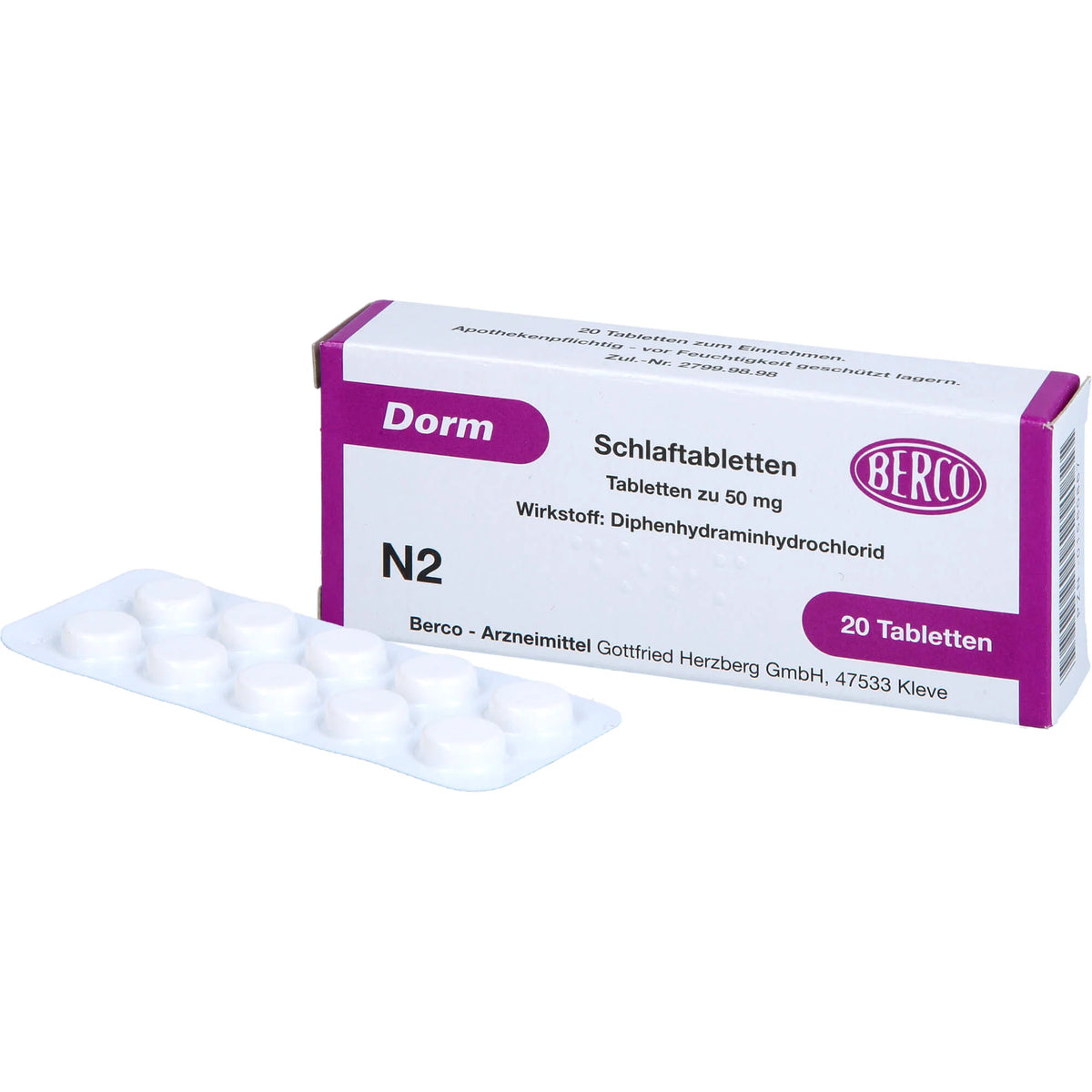
Berco Dorm sleep, 20 tablets
Berco Dorm sleep, 20 tablets
Couldn't load pickup availability
Dorm tablets. Active ingredient: Diphenhydramine hydrochloride. Indications: This medication is used to treat difficulty falling asleep and staying asleep.
For risks and side effects, please read the package leaflet and consult your doctor or pharmacist.
PACKAGE LEAFLET: INFORMATION FOR THE USER
Dorm tablets, 50 mg
. Active ingredient: Diphenhydramine hydrochloride.
Read the entire package leaflet carefully, as it contains important information for you. This medicine is available without a prescription. However, to achieve the best possible treatment success, Dorm must be taken as directed.
- Keep the package leaflet. You may want to read it again later.
- Ask your pharmacist if you need more information or advice.
- If your symptoms worsen or do not improve, you should definitely see a doctor.
- If any of the listed side effects become serious, or if you notice any side effects not listed in this leaflet, please inform your doctor or pharmacist.
This package leaflet contains:
- WHAT IS DORM AND WHAT IS IT USED FOR?
- WHAT DO YOU NEED TO KNOW BEFORE TAKING DORM?
- HOW IS DORM TO BE TAKEN?
- WHAT SIDE EFFECTS ARE POSSIBLE?
- HOW SHOULD DORM BE STORED?
- MORE INFORMATION
1. WHAT IS DORM AND WHAT IS IT USED FOR?
Dorm is a medication for difficulty falling asleep and staying asleep.
2. WHAT DO YOU NEED TO KNOW BEFORE TAKING DORM?
Dorm should not be taken if you have:
- acute asthma
- glaucoma
- Enlargement of the prostate gland.
In cases of stomach and/or duodenal ulcers, as well as narrowed gastrointestinal tract and narrowing of the bladder outlet, intolerances may occur when taking diphenhydramine hydrochloride. Diphenhydramine hydrochloride should not be taken in cases of epilepsy or during pregnancy. This medicine contains lactose and sorbitol. Therefore, please only take Dorm after consulting your doctor if you know that you have an intolerance to certain sugars.
Taking Dorm with other medicines:
Please inform your doctor or pharmacist if you are taking/using or have recently taken/used any other medicines, including those obtained without a prescription. The effects of diphenhydramine hydrochloride may be intensified when taken concurrently with other centrally acting medications (e.g., psychotropic drugs, sleeping pills, painkillers). This applies particularly if alcohol is consumed at the same time.
Pregnancy and breastfeeding:
Consult your doctor or pharmacist before taking/using any medicine. Diphenhydramine hydrochloride should not be taken during pregnancy.
Driving and operating machinery:
Even when used as directed, Dorm can impair your ability to react, potentially affecting your ability to drive or operate machinery. This should be taken into account when taking the medication during the day.
3. HOW TO TAKE DORM?
Always take Dorm exactly as described in this leaflet. Please ask your doctor or pharmacist if you are unsure. Unless otherwise prescribed, adults who wake up during the night or have difficulty falling asleep should take one tablet with some liquid 15 to 30 minutes before bedtime. If diphenhydramine hydrochloride is taken to treat sleep disorders, ensure you get enough sleep to avoid impaired reaction time (driving ability) the following morning. In cases of acute sleep disorders or acute anxiety, treatment should be limited to single doses whenever possible. To assess the need for continued use in cases of chronic sleep disorders or chronic anxiety neurosis, the dose should be gradually reduced and the medication discontinued after two weeks of daily intake. It should be noted that medication-induced sleep disturbances or anxiety and restlessness may initially worsen and recur (so-called withdrawal phenomenon).
If you have taken more Dorm than you should:
Stop taking Dorm and contact your doctor.
If you forget to take Dorm:
Do not take a double dose.
If you have any further questions on the use of this medicine, ask your doctor or pharmacist.
4. POSSIBLE SIDE EFFECTS
Like all medicines, Dorm can cause side effects, although not everybody gets them. The following frequency categories are used to describe side effects:
| The following categories are used as a basis for the frequency data on side effects: | |
| Very common: | more than 1 in 10 treated patients |
| Frequently: | 1 to 10 treated patients out of 100 |
| Occasionally: | 1 to 10 treated out of 1,000 |
| Rarely: | 1 to 10 treated out of 10,000 |
| Very rare: | less than 1 in 10,000 treated |
| Not known: | Frequency cannot be estimated based on the available data. |
Side effects can occur, especially in cases of overdose or individual hypersensitivity.
Occasionally: Taking diphenhydramine hydrochloride can lead to skin reactions, gastrointestinal disturbances, dry mouth, and difficulty urinating. Furthermore, hypersensitivity to sunlight and ultraviolet rays may occur. After prolonged daily use, sleep disturbances may worsen again if therapy is suddenly discontinued.
Please inform your doctor or pharmacist if any of the listed side effects become serious or if you notice any side effects not listed in this leaflet.
5. HOW TO STORE DORM?
Keep out of the sight and reach of children! Do not use this medicine after the expiry date which is stated on the blister strip. The expiry date refers to the last day of that month.
Storage conditions:
Store protected from moisture!
6. FURTHER INFORMATION
What Dorm contains:
The active ingredient is: diphenhydramine hydrochloride. 1 Dorm tablet contains 50 mg diphenhydramine hydrochloride. The other ingredients are: lactose monohydrate, maize starch, microcrystalline cellulose (E460), sodium carboxymethyl starch type A, sorbitol (E420), talc (E553b), povidone K25 (E1201), stearic acid (vegetable).
What Dorm looks like and contents of the pack:
White tablets. Dorm is available in a pack of 20 tablets.
(Apo) Usually ship out within 3-5 business days