
betapharm
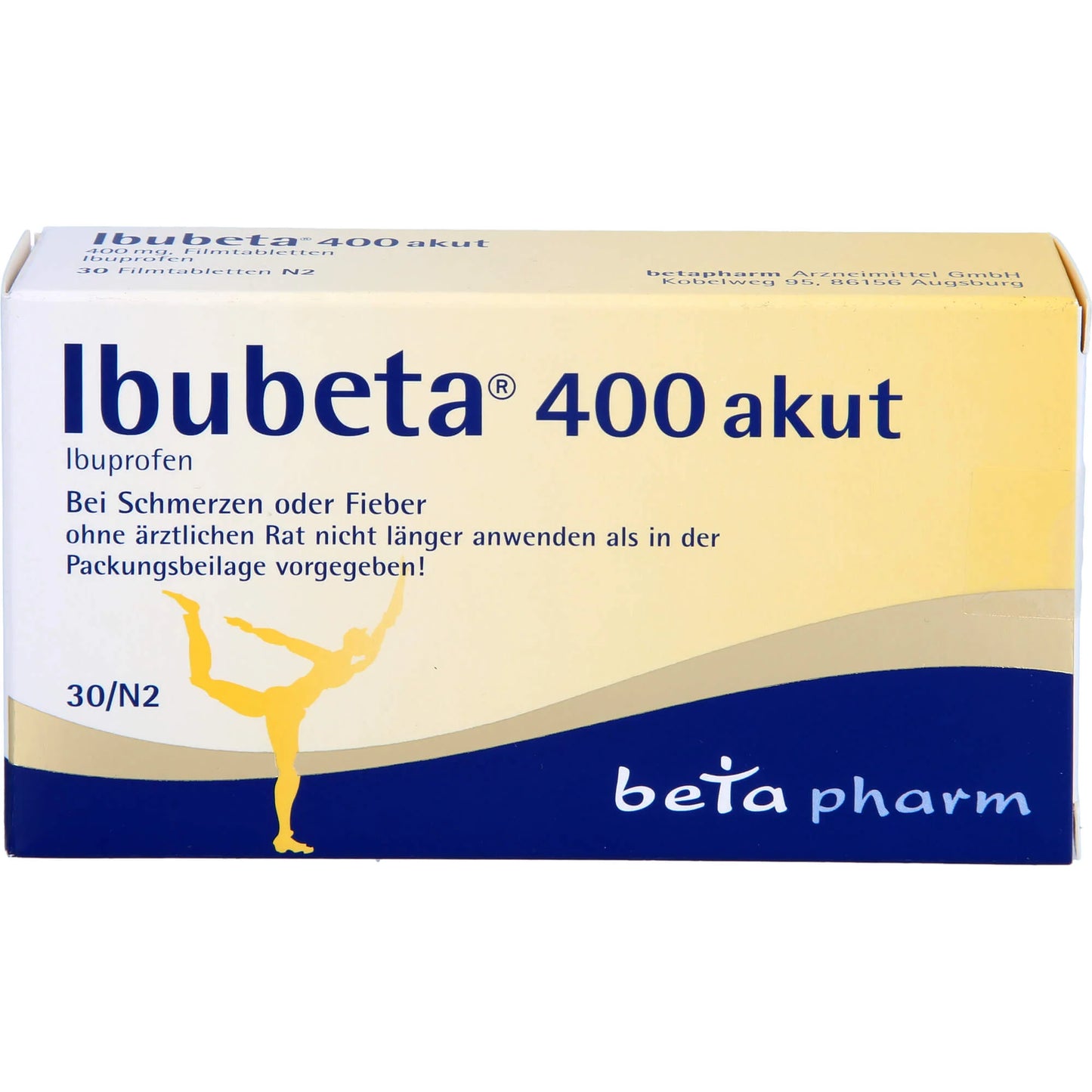
Ibubeta 400 acute
Ibubeta 400 acute
Couldn't load pickup availability
Ibubeta 400 acute film-coated tablets. Active ingredient: Ibuprofen. Indications: for mild to moderate pain such as headaches, toothaches, period pain, and fever.
For risks and side effects, read the package leaflet and ask your doctor or pharmacist.
PACKAGE LEAFLET: INFORMATION FOR THE USER
Ibubeta 400 acute, 400 mg film-coated tablets
Active ingredient: Ibuprofen
Read the entire package leaflet carefully before you start taking this medicine because it contains important information. Always take this medicine exactly as described in this package leaflet or exactly as your doctor or pharmacist has told you.
- Keep the package leaflet. You may want to read it again later.
- Ask your pharmacist if you need more information or advice.
- If you experience any side effects, talk to your doctor or pharmacist. This includes any possible side effects not listed in this leaflet. See section 4.
- If you do not feel better or even feel worse after 4 days, consult your doctor.
What this leaflet contains:
- WHAT IS IBUBETA 400 ACUTE AND WHAT IS IT USED FOR?
- WHAT SHOULD YOU CONSIDER BEFORE TAKING IBUBETA 400 ACUTE?
- HOW SHOULD IBUBETA 400 BE TAKED IN ACUTE AGE?
- WHAT SIDE EFFECTS ARE POSSIBLE?
- HOW SHOULD IBUBETA 400 BE STORED IN CASE OF CURRENT USE?
- PACKAGE CONTENTS AND FURTHER INFORMATION
1. WHAT IS IBUBETA 400 ACUTE AND WHAT IS IT USED FOR?
Ibubeta 400 acute is an anti-inflammatory and pain-relieving medicine (non-steroidal anti-inflammatory drug/antirheumatic [NSAID]). Ibubeta 400 acute is used for mild to moderate pain such as headaches, toothaches, period pain, and fever.
2. WHAT SHOULD YOU KNOW BEFORE TAKING IBUBETA 400 ACUTE?
Ibubeta 400 acute must not be taken:
- if you are allergic to ibuprofen or any of the other ingredients of this medicine listed in section 6,
- if you have previously experienced asthma attacks, nasal congestion, or skin reactions after taking acetylsalicylic acid or other non-steroidal anti-inflammatory drugs,
- in cases of unexplained blood disorders,
- in the case of existing or recurrent stomach/duodenal ulcers (peptic ulcers) or bleeding (at least 2 separate episodes of proven ulcers or bleeding),
- in the case of a history of gastrointestinal bleeding or perforation related to previous NSAID therapy,
- in cases of cerebral hemorrhage (cerebrovascular hemorrhage) or other active bleeding,
- in cases of severe liver or kidney dysfunction,
- in cases of severe heart failure (cardiac insufficiency),
- in the last third of pregnancy,
- for children under 20 kg (6 years), as this dose strength is generally not suitable due to the active ingredient content.
Warnings and precautions:
Please talk to your doctor or pharmacist before taking Ibubeta 400 akut.
Gastrointestinal safety:
The simultaneous use of Ibubeta 400 akut with other NSAIDs, including so-called COX-2 inhibitors (cyclooxygenase-2 inhibitors), should be avoided. Side effects can be reduced by using the lowest effective dose for the shortest duration necessary to control symptoms. Elderly patients: Elderly patients experience side effects more frequently after using NSAIDs, particularly gastrointestinal bleeding and perforation, which can be life-threatening. Therefore, particularly careful medical monitoring is required in elderly patients. Gastrointestinal bleeding, ulceration, and perforation: Gastrointestinal bleeding, ulceration, and perforation, including fatal cases, have been reported during treatment with all NSAIDs. They can occur at any time during therapy, with or without prior warning symptoms or a history of serious gastrointestinal events. The risk of gastrointestinal bleeding, ulceration, and perforation is higher with increasing NSAID doses, in patients with a history of ulcers, particularly those complicated by bleeding or perforation (see section 2. Ibubeta 400 akut must not be taken), and in elderly patients. These patients should start treatment with the lowest available dose. For these patients, as well as for patients requiring concomitant therapy with low-dose acetylsalicylic acid (ASA) or other drugs that may increase the risk of gastrointestinal disorders, combination therapy with gastroprotective agents (e.g., misoprostol or proton pump inhibitors) should be considered. If you have a history of gastrointestinal side effects, especially if you are elderly, you should report any unusual abdominal symptoms (particularly gastrointestinal bleeding), especially at the start of treatment. Caution is advised if you are also taking medications that may increase the risk of ulcers or bleeding, such as oral corticosteroids, anticoagulants like warfarin, selective serotonin reuptake inhibitors (SSRIs), which are used, among other things, to treat depression, or antiplatelet agents like aspirin (see section 2. Taking Ibubeta 400 akut with other medicines). If you experience gastrointestinal bleeding or ulcers during treatment with Ibubeta 400 akut, treatment should be discontinued. NSAIDs should be used with caution in patients with a history of gastrointestinal disease (ulcerative colitis, Crohn's disease) as their condition may worsen (see section 4. Possible side effects).
Cardiovascular effects:
Anti-inflammatory/pain-relieving medications such as ibuprofen may be associated with a slightly increased risk of heart attack or stroke, particularly when used in high doses. Do not exceed the recommended dose or duration of treatment. You should discuss your treatment with your doctor or pharmacist before taking Ibubeta 400 akut if you have any of the following conditions:
- have a heart condition, including heart failure (cardiac insufficiency) and angina (chest pain), or have had a heart attack, bypass surgery, peripheral arterial occlusive disease (poor circulation in the legs or feet due to narrowed or blocked arteries) or any type of stroke (including mini-stroke or transient ischemic attack, TIA).
- If you have high blood pressure, diabetes or high cholesterol, or if heart disease or strokes run in your family history, or if you are a smoker.
Skin reactions:
Very rarely, serious skin reactions with redness and blistering, some with fatal outcomes, have been reported during NSAID therapy (exfoliative dermatitis, Stevens-Johnson syndrome, and toxic epidermal necrolysis/Lyell syndrome; see section 4. Possible side effects). The highest risk for such reactions appears to be at the start of therapy, as these reactions occurred in the majority of cases during the first month of treatment. At the first sign of skin rashes, mucosal lesions, or any other signs of a hypersensitivity reaction, Ibubeta 400 akut should be discontinued and a doctor consulted immediately. Ibubeta 400 akut should not be used during a chickenpox (varicella) infection.
Other information:
Ibubeta 400 akut should only be used after a careful benefit-risk assessment in the following cases:
- certain congenital blood disorders (e.g. acute intermittent porphyria),
- certain autoimmune diseases (systemic lupus erythematosus and mixed connective tissue disease).
Particularly careful medical monitoring is required:
- in cases of impaired kidney or liver function,
- immediately after major surgical procedures,
- in cases of allergies (e.g., skin reactions to other medications, asthma, hay fever), chronic nasal congestion, or chronic respiratory diseases that narrow the airways.
Severe acute hypersensitivity reactions (e.g., anaphylactic shock) are very rarely observed. If the first signs of a severe hypersensitivity reaction occur after taking Ibubeta 400 akut, treatment must be discontinued. Appropriate medical measures must be initiated by qualified personnel. Ibuprofen, the active ingredient in Ibubeta 400 akut, can temporarily inhibit platelet function (platelet aggregation). Patients with blood clotting disorders should therefore be carefully monitored. With prolonged use of Ibubeta 400 akut, regular monitoring of liver function, kidney function, and blood count is necessary. If taking Ibubeta 400 akut before surgery, consult your doctor or dentist. Prolonged use of painkillers can cause headaches that should not be treated with increased doses of the medication. Consult your doctor if you frequently suffer from headaches despite taking Ibubeta 400 akut! In general, the habitual use of painkillers, especially combinations of several pain-relieving substances, can lead to permanent kidney damage with the risk of kidney failure (analgesic nephropathy).
Children:
- Please note the information in section 2. Ibubeta 400 akut must not be taken.
- Dehydrated children and adolescents are at risk of kidney dysfunction.
Taking Ibubeta 400 akut with other medicines:
Tell your doctor or pharmacist if you are taking, have recently taken, or might take any other medicines. Ibubeta 400 akut can affect other medicines or be affected by them. For example:
- Drugs that have an anticoagulant effect (i.e., thin the blood/prevent blood clotting, e.g., acetylsalicylic acid, warfarin, ticlopidine).
- Drugs that lower high blood pressure (ACE inhibitors such as captopril, beta-blockers such as atenolol-containing drugs, angiotensin II receptor antagonists such as losartan).
Some other medications can also affect treatment with Ibubeta 400 akut, or be affected by it. Therefore, you should always consult your doctor or pharmacist before using Ibubeta 400 akut with other medications. Ibubeta 400 akut can weaken the effect of ACE inhibitors (medications for treating heart failure and high blood pressure). Furthermore, the risk of developing kidney dysfunction may be increased when used concurrently. The concurrent use of Ibubeta 400 akut and digoxin (a medication to strengthen the heart), phenytoin (a medication for treating seizures), or lithium (a medication for treating mental health conditions) can increase the concentration of these medications in the blood. Monitoring of serum lithium, digoxin, and phenytoin levels is generally not necessary when used as directed (for a maximum of 4 days). Ibubeta 400 akut can weaken the effect of diuretics and antihypertensive drugs. The simultaneous administration of Ibubeta 400 akut and potassium-sparing diuretics (certain types of diuretics) can lead to an increase in blood potassium levels. The simultaneous administration of Ibubeta 400 akut with other anti-inflammatory and pain-relieving drugs from the NSAID group or with glucocorticoids increases the risk of gastrointestinal ulcers or bleeding. Antiplatelet agents and certain antidepressants (selective serotonin reuptake inhibitors/SSRIs) can increase the risk of gastrointestinal bleeding. Administering Ibubeta 400 akut within 24 hours before or after methotrexate can lead to increased methotrexate concentrations and an increase in its adverse effects. The risk of kidney damage from ciclosporin (a drug used to prevent transplant rejection and also in the treatment of rheumatoid arthritis) is increased by the concurrent use of certain NSAIDs. This effect cannot be ruled out for a combination of ciclosporin and ibuprofen. Drugs containing probenecid or sulfinpyrazone (medications for the treatment of gout) can delay the elimination of ibuprofen. This can lead to an accumulation of Ibubeta 400 akut in the body and an increase in its adverse effects. NSAIDs may enhance the effect of anticoagulants such as warfarin. Monitoring of coagulation status is recommended during concurrent treatment. Clinical studies have shown interactions between NSAIDs and sulfonylureas (medications for lowering blood sugar). Although interactions between ibuprofen and sulfonylureas have not yet been described, monitoring of blood glucose levels is recommended as a precaution when these drugs are taken concurrently. Tacrolimus:The risk of kidney damage is increased when both drugs are administered simultaneously. Zidovudine: There is evidence of an increased risk of bleeding into the joints (hemarthrosis) and hematomas in HIV-positive hemophilia patients (bleeders) who are taking zidovudine and ibuprofen concurrently.
Taking Ibubeta 400 akut with food, drinks, and alcohol:
You should avoid drinking alcohol while using Ibubeta 400 akut.
Pregnancy, breastfeeding, and fertility:
If you are pregnant or breastfeeding, or if you suspect you may be pregnant or are planning to become pregnant, ask your doctor or pharmacist for advice before taking this medicine.
Pregnancy:
If you become pregnant while using Ibubeta 400 akut, you must inform your doctor. You may only use ibuprofen during the first and second trimesters of pregnancy after consulting your doctor. Ibubeta 400 akut must not be used during the last trimester of pregnancy due to an increased risk of complications for both mother and child.
Breastfeeding:
The active ingredient ibuprofen and its breakdown products pass into breast milk only in small amounts. Since no adverse effects on the infant have been reported to date, interrupting breastfeeding is generally not necessary for short-term use. If prolonged use or higher doses are prescribed, early weaning should be considered.
Fertility:
Ibubeta 400 acute belongs to a group of medicines (NSAIDs) that can impair female fertility. This effect is reversible after stopping the medicine.
Driving and operating machinery:
Since central nervous system side effects such as fatigue and dizziness can occur when using higher doses of Ibubeta 400 acute, reaction time may be altered in individual cases, and the ability to actively participate in road traffic and operate machinery may be impaired. This applies to an even greater extent in combination with alcohol. You may then no longer be able to react quickly and appropriately to unexpected and sudden events. In this case, do not drive a car or other vehicles! Do not operate tools or machinery! Do not work without secure footing!
3. HOW TO TAKE IBUBETA 400 ACUTE?
Always take this medicine exactly as described in this leaflet or as your doctor or pharmacist has told you. Check with your doctor or pharmacist if you are not sure. Do not take Ibubeta 400 akut for more than 4 days without consulting a doctor or dentist. The recommended dose is:
- Body weight 20-29 kg (age 6-9 years): Single dose ½ film-coated tablet (equivalent to 200 mg ibuprofen), max. daily dose 1 ½ film-coated tablets (equivalent to 600 mg ibuprofen),
- Body weight 30-39 kg (age 10-12 years): Single dose ½ film-coated tablet (equivalent to 200 mg ibuprofen), max. daily dose 2 film-coated tablets (equivalent to 800 mg ibuprofen),
- Body weight > 40 kg (children and adolescents aged 12 years and over and adults): Single dose ½ - 1 film-coated tablet (corresponding to 200 - 400 mg ibuprofen), max. daily dose 3 film-coated tablets (corresponding to 1,200 mg ibuprofen).
If you have taken the maximum single dose, wait at least 6 hours before taking the next dose. Children under 6 years of age or weighing less than 20 kg must not take Ibubeta 400 akut (see section 2. Ibubeta 400 akut must not be taken). If children and adolescents need to take this medicine for more than 3 days, or if their symptoms worsen, medical advice should be sought. No dose adjustment is necessary for elderly patients or patients with mild to moderate renal or hepatic impairment (for patients with severe renal or hepatic impairment, see section 2. Ibubeta 400 akut must not be taken).
Method of administration:
Swallow the film-coated tablets whole with plenty of liquid (e.g., a glass of water) during or after a meal. For patients with a sensitive stomach, it is recommended to take Ibubeta 400 akut with food. Please talk to your doctor or pharmacist if you feel that the effect of Ibubeta 400 akut is too strong or too weak.
If you have taken more Ibubeta 400 akut than you should:
Take Ibubeta 400 akut according to your doctor's instructions or the dosage instructions in the package leaflet. If you feel that you are not experiencing sufficient pain relief, do not increase the dose yourself, but consult your doctor. Symptoms of an overdose may include central nervous system disorders such as headache, dizziness, drowsiness, and loss of consciousness (in children, also seizures), as well as abdominal pain, nausea, and vomiting. Gastrointestinal bleeding and liver and kidney dysfunction are also possible. Furthermore, a drop in blood pressure, slowed breathing (respiratory depression), and a bluish-red discoloration of the skin and mucous membranes (cyanosis) may occur. There is no specific antidote. If you suspect an overdose of Ibubeta 400 akut, please inform your doctor. They can then decide on the necessary measures depending on the severity of the poisoning.
If you forget to take Ibubeta 400 akut:
If you miss a dose, do not take more than the usual recommended amount at the next dose.
If you have any further questions about the use of this medicine, ask your doctor or pharmacist.
4. POSSIBLE SIDE EFFECTS:
Like all medicines, this medicine can cause side effects, although not everybody gets them.
| The following categories are used as a basis for the frequency data on side effects: | |
| Very common: | more than 1 in 10 treated patients |
| Frequently: | 1 to 10 treated patients out of 100 |
| Occasionally: | 1 to 10 treated out of 1,000 |
| Rarely: | 1 to 10 treated out of 10,000 |
| Very rare: | less than 1 in 10,000 treated |
| Not known: | Frequency cannot be estimated based on the available data. |
Possible side effects:
The following list of adverse effects includes all known side effects reported during treatment with ibuprofen, including those observed during high-dose, long-term therapy in patients with rheumatic diseases. Frequency data exceeding very rare reports refer to short-term use up to a maximum daily dose of 1,200 mg ibuprofen for oral dosage forms and 1,800 mg for suppositories. It should be noted that the following adverse drug reactions are predominantly dose-dependent and vary from patient to patient. The most frequently observed side effects affect the gastrointestinal tract. Stomach/duodenal ulcers (peptic ulcers), perforations, or bleeding, sometimes fatal, can occur, particularly in elderly patients (see section 2 under Warnings and Precautions). Nausea, vomiting, diarrhea, flatulence, constipation, indigestion, abdominal pain, tarry stools, hematemesis, ulcerative stomatitis, and exacerbation of colitis and Crohn's disease (see section 2 under Warnings and Precautions) have been reported after use. Gastritis has been observed less frequently. In particular, the risk of gastrointestinal bleeding depends on the dose and duration of use. Edema, hypertension, and heart failure have been reported in association with NSAID treatment. Drugs such as Ibubeta 400 akut may be associated with a slightly increased risk of heart attacks (myocardial infarction) or strokes.
Cardiac:
Very rare: Palpitations, heart failure, myocardial infarction.
Blood and lymphatic system:
Very rare: Blood disorders (anemia, leukopenia, thrombocytopenia, pancytopenia, agranulocytosis). Early signs may include: fever, sore throat, superficial mouth ulcers, flu-like symptoms, severe fatigue, nosebleeds, and skin bleeding. In these cases, the medication should be discontinued immediately and a doctor consulted. Any self-treatment with pain relievers or fever reducers should be avoided.
Nervous system:
Occasionally: Central nervous system disorders such as headache, dizziness, insomnia, agitation, irritability, or fatigue.
Eyes: Occasionally:
Visual disturbances.
Ears:
Rarely: Ringing in the ears (tinnitus).
Gastrointestinal tract:
Frequently: Gastrointestinal discomfort such as heartburn, abdominal pain, nausea, vomiting, flatulence, diarrhea, constipation, and minor gastrointestinal bleeding, which in exceptional cases can cause anemia.
Occasionally: Stomach/duodenal ulcers (peptic ulcers), possibly with bleeding and perforation, inflammation of the oral mucosa with ulceration (ulcerative stomatitis), exacerbation of ulcerative colitis or Crohn's disease, inflammation of the stomach lining (gastritis).
Very rarely: Inflammation of the esophagus (esophagitis) and pancreas (pancreatitis), formation of membranous constrictions in the small and large intestine (intestinal, diaphragm-like strictures). If severe upper abdominal pain, vomiting blood, blood in the stool and/or black stools occur, you must stop taking Ibubeta 400 akut and inform your doctor immediately.
Kidneys and urinary tract:
Very rare: Increased fluid retention in the tissues (edema), particularly in patients with high blood pressure or impaired kidney function; nephrotic syndrome (fluid retention in the body [edema] and significant protein loss in the urine); inflammatory kidney disease (interstitial nephritis), which may be accompanied by acute kidney failure. Kidney tissue damage (papillary necrosis) and elevated uric acid levels in the blood may also occur. Decreased urine output, fluid retention in the body (edema), and general malaise may be signs of kidney disease, potentially leading to kidney failure. If the aforementioned symptoms occur or worsen, you must stop taking Ibubeta 400 akut and contact your doctor immediately.
Skin and subcutaneous tissue:
Very rare: Severe skin reactions such as rash with redness and blistering (e.g., Stevens-Johnson syndrome, toxic epidermal necrolysis/Lyell syndrome), hair loss (alopecia). In exceptional cases, severe skin infections and soft tissue complications can occur during a chickenpox (varicella) infection (see also Infections and parasitic diseases).
Infections and parasitic diseases:
Very rarely, a worsening of infection-related inflammation (e.g., development of necrotizing fasciitis) has been described in temporal association with the use of NSAIDs. Very rarely, symptoms of non-infectious meningitis (aseptic meningitis), such as severe headache, nausea, vomiting, fever, stiff neck, or impaired consciousness, have been observed during the use of ibuprofen. An increased risk appears to exist for patients who already suffer from certain autoimmune diseases (systemic lupus erythematosus, mixed connective tissue disease). Therefore, if signs of an infection (e.g., redness, swelling, increased warmth, pain, fever) appear or worsen during the use of Ibubeta 400, a doctor should be consulted immediately.
Vessels:
Very rare: High blood pressure (arterial hypertension).
Immune system:
Occasionally: Hypersensitivity reactions with skin rashes and itching, as well as asthma attacks (possibly with a drop in blood pressure). In this case, a doctor must be informed immediately, and Ibubeta 400 akut must no longer be taken.
Very rarely: Severe generalized hypersensitivity reactions. These can manifest as: facial edema, tongue swelling, internal laryngeal swelling with narrowing of the airways, shortness of breath, rapid heartbeat, drop in blood pressure leading to life-threatening shock. If any of these symptoms occur, which can happen even with the first use, immediate medical attention is required.
Liver and gallbladder:
Very rarely: Liver dysfunction, liver damage, especially with long-term therapy, liver failure, acute hepatitis. Liver function should be monitored regularly during prolonged use.
Psychiatric disorders:
Very rarely: Psychotic reactions, depression.
Reporting of side effects:
If you experience any side effects, talk to your doctor or pharmacist. This includes any possible side effects not listed in this leaflet. You can also report side effects directly to the Federal Institute for Drugs and Medical Devices, Department of Pharmacovigilance, Kurt-Georg-Kiesinger Allee 3, D-53175 Bonn, website: www.bfarm.de. By reporting side effects, you can help provide more information on the safety of this medicine.
5. HOW TO STORE IBUBETA 400 ACUTE?
Keep this medicine out of the sight and reach of children. Do not use this medicine after the expiry date which is stated on the carton/blister pack after EXP. The expiry date refers to the last day of that month. This medicine does not require any special storage conditions. Do not throw away any medicines via wastewater or household waste. Ask your pharmacist how to throw away medicines you no longer use. These measures will help protect the environment.
6. CONTENTS OF THE PACK AND OTHER INFORMATION
What Ibubeta 400 akut contains:
The active ingredient is ibuprofen. One film-coated tablet contains 400 mg ibuprofen. The other ingredients are: microcrystalline cellulose, croscarmellose sodium, hypromellose, macrogol 400, magnesium stearate (Ph. Eur.) [vegetable], maize starch, colloidal anhydrous silica, stearic acid (Ph. Eur.) [vegetable], talc, titanium dioxide (E 171).
(Apo) Usually ship out within 3-5 business days