

Stada
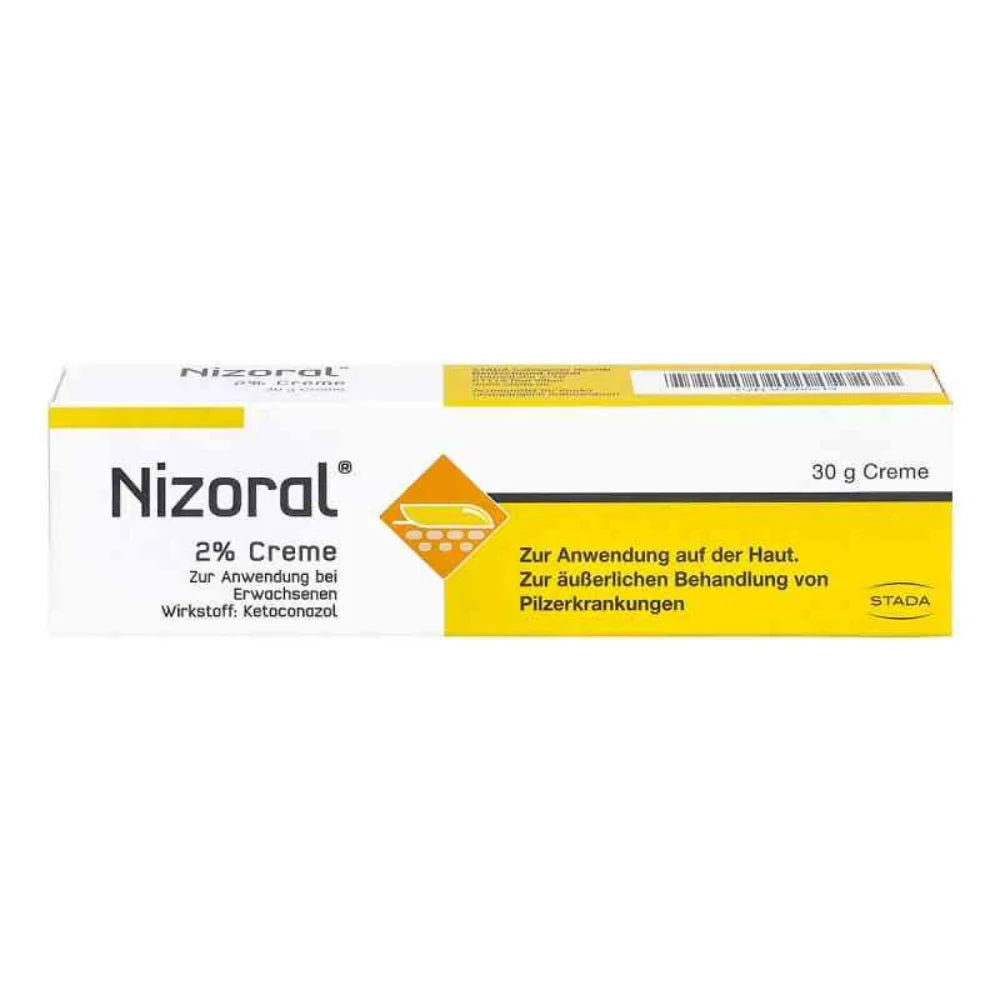
Stada Nizoral 2% Cream for fungal skin infections, 30 g
Stada Nizoral 2% Cream for fungal skin infections, 30 g
Couldn't load pickup availability
Nizoral 2% Cream. Active ingredient: Ketoconazole. Indications: Used to treat fungal infections of the skin (dermatophytoses) such as ringworm (e.g., athlete's foot, leg fungus) and skin fungus caused by microsporum, as well as infections caused by yeast fungi (thrush).
For risks and side effects, read the package leaflet and ask your doctor or pharmacist.
PACKAGE LEAFLET: INFORMATION FOR THE USER
Nizoral 2% Cream, for use in adults
. Active ingredient: Ketoconazole.
Read the entire package leaflet carefully before you start using this medicine because it contains important information. Always use this medicine exactly as described in this package leaflet or exactly as your doctor or pharmacist has told you.
- Keep the package leaflet. You may want to read it again later.
- Ask your pharmacist if you need more information or advice.
- If you experience any side effects, talk to your doctor or pharmacist. This includes any possible side effects not listed in this leaflet. See section 4.
- If you do not feel better or even feel worse after 14 days, consult your doctor.
What this leaflet contains:
- WHAT IS NIZORAL 2% CREAM AND WHAT IS IT USED FOR?
- WHAT SHOULD YOU CONSIDER BEFORE USING NIZORAL 2% CREAM?
- HOW SHOULD NIZORAL 2% CREAM BE USED?
- WHAT SIDE EFFECTS ARE POSSIBLE?
- HOW SHOULD NIZORAL 2% CREAM BE STORED?
- PACKAGE CONTENTS AND FURTHER INFORMATION
1. WHAT IS NIZORAL 2% CREAM AND WHAT IS IT USED FOR?
Nizoral 2% Cream is an antifungal medicine for the external treatment of fungal infections of the skin (antimycotic). Nizoral 2% Cream is used for fungal infections of the skin (dermatophytoses) such as ringworm (e.g., athlete's foot, leg fungus) and skin fungus caused by microsporum, as well as infections caused by yeast fungi (thrush). Nizoral 2% Cream is intended for use in adults.
2. WHAT YOU SHOULD KNOW BEFORE USING NIZORAL 2% CREAM?
Nizoral 2% Cream must not be used if you are allergic to ketoconazole or any of the other ingredients of this medicine listed in section 6.
Warnings and precautions:
Nizoral 2% Cream must not come into contact with the eyes. If you are currently using topical cortisone-containing medications for your symptoms, consult your doctor or pharmacist. You can start using Nizoral 2% Cream immediately, but you should not stop using the cortisone-containing medication abruptly. Your skin may react with redness or itching.
Follow the treatment regimen:
- Apply the cortisone-containing medicine in the morning and Nizoral 2% cream in the evening for one week.
- After that, apply the cortisone-containing medicine every 2 to 3 days in the morning and Nizoral 2% cream every evening for another one to two weeks.
- Then stop using the cortisone-containing medicine and, if necessary, only use Nizoral 2% cream.
Please ask your doctor or pharmacist if you are not entirely sure.
Using Nizoral 2% Cream with other medicines:
Tell your doctor or pharmacist if you are taking, have recently taken, or might take any other medicines. There is no evidence that Nizoral 2% Cream affects the way other medicines work.
Pregnancy and breastfeeding:
If you are pregnant or breastfeeding, think you may be pregnant, or are planning to have a baby, ask your doctor or pharmacist for advice before using this medicine. There are no known risks associated with using Nizoral 2% Cream during pregnancy and breastfeeding. However, if you are pregnant or breastfeeding, you should only use Nizoral 2% Cream after consulting a doctor. Do not apply Nizoral 2% Cream to the breast area while breastfeeding. This will prevent direct contact between the infant and Nizoral 2% Cream.
Driving and operating machinery:
No special precautions are necessary.
Nizoral 2% Cream contains stearyl alcohol, cetyl alcohol, and propylene glycol:
Stearyl alcohol and cetyl alcohol may cause localized skin irritation (e.g., contact dermatitis). Propylene glycol may cause skin irritation.
3. HOW TO USE NIZORAL 2% CREAM?
Always use this medicine exactly as described in this leaflet or as your doctor or pharmacist has told you. Check with your doctor or pharmacist if you are not sure. The recommended dose is: Apply a sufficient amount of cream once a day, or twice a day in cases of severe infestation, to the affected skin and the surrounding area (approx. 1-2 cm).
Method of application:
Before first use, pierce the seal of the tube with the tip located in the cap. Massage the cream in with your finger until it is absorbed.
Precautions for use:
Avoid contact of Nizoral 2% cream with the eyes! Wash your hands thoroughly after applying the cream.
Duration of use:
The symptoms of the condition usually subside significantly within the first 14 days of starting treatment with Nizoral 2% Cream. Continue treatment for at least a few days after the symptoms have disappeared to prevent recurrence. The total treatment duration is on average 2-3 weeks for thrush, 3-4 weeks for ringworm depending on the location, and up to 6 weeks for ringworm on the feet. If the symptoms of the condition do not subside within the first 14 days of starting treatment, you must consult a doctor. Please talk to your doctor or pharmacist if you feel that the effect of Nizoral 2% Cream is too strong or too weak.
If you have used more Nizoral 2% Cream than you should:
Excessive or more frequent application to the skin than directed can lead to skin redness (erythema), fluid retention in the skin (edema), and burning. These symptoms disappear after stopping treatment. Nizoral 2% Cream should not be swallowed. If you accidentally swallow Nizoral 2% Cream, talk to your doctor.
4. POSSIBLE SIDE EFFECTS
Like all medicines, this medicine can cause side effects, although not everybody gets them.
Possible side effects:
Common (may affect up to 1 in 10 people):
- Burn
- Skin reddening (erythema), itching at the injection site.
Occasionally (may affect up to 1 in 100 people treated):
- Hypersensitivity
- Blisters, skin inflammation, rash, skin peeling, fluid retention in the skin (edema)
- Skin reactions at the administration site: bleeding, mild pain, dry skin, inflammation, skin irritation, paresthesia.
Not known (frequency cannot be estimated based on the available data):
- hives
Reporting of side effects:
If you experience any side effects, talk to your doctor or pharmacist. This includes any possible side effects not listed in this leaflet. You can also report side effects directly to the Federal Institute for Drugs and Medical Devices, Dept. Pharmacovigilance, Kurt-Georg-Kiesinger Allee 3, D-53175 Bonn, Germany, website: www.bfarm.de. By reporting side effects, you can help provide more information on the safety of this medicine.
5. HOW TO STORE NIZORAL 2% CREAM?
Keep this medicine out of the sight and reach of children. Do not use this medicine after the expiry date which is stated on the carton and tube after "EXP". The expiry date refers to the last day of that month. This medicine does not require any special storage conditions. Medicines should be disposed of according to local regulations. Therefore, ask your pharmacist how to dispose of medicines no longer required. By using this product, you are contributing to environmental protection.
6. CONTENTS OF THE PACK AND OTHER INFORMATION
What Nizoral 2% Cream contains:
The active ingredient is: ketoconazole. 1 g of cream contains 20 mg of ketoconazole. The other ingredients are: propylene glycol, stearyl alcohol (Ph. Eur.), cetyl alcohol (Ph. Eur.), sorbitan stearate, polysorbate 60, isopropyl myristate (Ph. Eur.), sodium sulfite (E221), polysorbate 80, purified water.
What Nizoral 2% Cream looks like and contents of the pack:
Nizoral 2% Cream is a white emulsion. Nizoral 2% Cream is available in aluminium tubes containing 15 g and 30 g of cream. Not all pack sizes may be marketed.
Further information:
Ketoconazole, the active ingredient in Nizoral 2% Cream, has a broad spectrum of activity (against skin, yeast, mold, and other fungi) and is therefore effective against almost all pathogens that cause fungal skin infections. Before applying Nizoral 2% Cream, you should wash the affected areas of skin and then dry them thoroughly. Use fresh towels daily – preferably disposable towels. This prevents the spread of the fungus to other areas of skin via the towel. After each application, you should wash your hands carefully to avoid spreading the fungal infection to other parts of the body or to other people. In most cases, Nizoral 2% Cream leads to a reduction in symptoms (itching) and healing of the affected skin areas after a few days. Even if no skin changes are visible anymore, you should continue treatment for at least a few more days. Fungi may still be present in deeper layers of the skin, which could lead to a recurrence of the fungal infection.
(Apo) Usually ship out within 3-5 business days